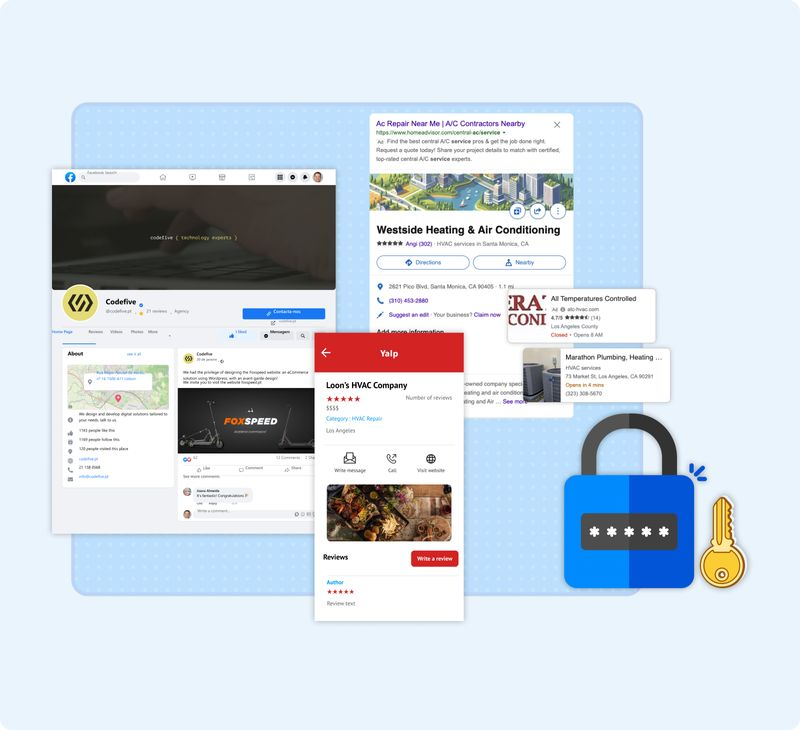
Buy software when your team already owns the process and needs a better system. Choose a managed service when you need someone accountable for setup, monitoring, execution, reporting, and exceptions. Broader reputation management is appropriate when reviews are only one part of the trust problem.
The short distinction
| Option | Primary job | Who operates it |
|---|---|---|
| Review software | Provides request, monitoring, response, routing, or reporting features | Your staff or an outside service provider |
| Review management | Runs a consistent, policy-conscious review process | An assigned internal owner or managed-service team |
| Reputation management | Coordinates the broader public signals that shape trust | Multiple business owners, often with a strategic lead |
What review management includes
A sound review-management process defines:
- which customers are eligible to receive a request;
- which event triggers the request and which channels have consent;
- how reminders and opt-outs work;
- which review sites matter to the business;
- who monitors and responds to new feedback;
- which issues require a private or urgent escalation; and
- how trends, response time, and unresolved issues are reported.
The process must not screen customers by expected sentiment. Google prohibits selectively requesting positive reviews, offering incentives for reviews, and asking customers to include specific content.
What broader reputation management adds
A business's public reputation is not contained in one rating. Customers also encounter business information, local listings, search results, social profiles, service pages, news, regulatory records, and the quality of the business's response when something goes wrong.
Broader work may include:
- business-profile and local-listing accuracy;
- duplicate profile and ownership issues;
- customer-experience themes and operational follow-up;
- accurate service, location, and expertise content;
- response and crisis-escalation procedures;
- brand search and local visibility monitoring; and
- website trust and conversion improvements.
A service provider cannot promise that legitimate negative reviews will be removed. Reviews should be reported only when there is a good-faith reason to believe they violate the destination platform's policy.
Software access is not the same as a managed outcome
Software can send, aggregate, draft, alert, and report. It cannot decide the correct customer eligibility rule, verify disputed facts, own the response tone, repair a service failure, or keep every integration healthy without an operator.
When comparing a license with a managed service, ask who handles onboarding, integrations, monitoring, failed requests, response approval, listing exceptions, staff training, reporting, and offboarding. That responsibility often matters more than the feature count.
How to choose the right scope
- Define the business problem. Is the issue request consistency, unanswered reviews, incorrect listings, weak local discovery, or a broader trust problem?
- Name the process owner. Software without an accountable operator often becomes an unused login.
- Map channels and locations. Google-only, multiple review sites, and multi-location operations require different workflows.
- Set policy boundaries. Document consent, eligibility, response approval, privacy, and escalation.
- Choose measures. Track process health and customer actions without claiming that one metric proves revenue or ranking gains.
Official sources
- Google Business Profile Help: tips to get more reviews
- Google Maps user-contributed content policy
- FTC: Consumer Reviews and Testimonials Rule questions and answers
This is general operational guidance, not legal advice.