How to use this checklist
Assign one accountable owner, record the starting condition, fix high-risk accuracy and access problems first, and review the checklist quarterly or after a major business change.
Ownership, access, and recovery
- Confirm the business owns or controls its primary profiles and domains.
- Give each profile owner or manager an individual account; do not share passwords.
- Remove access that is no longer required and document permission levels.
- Secure recovery methods and use multi-factor authentication where available.
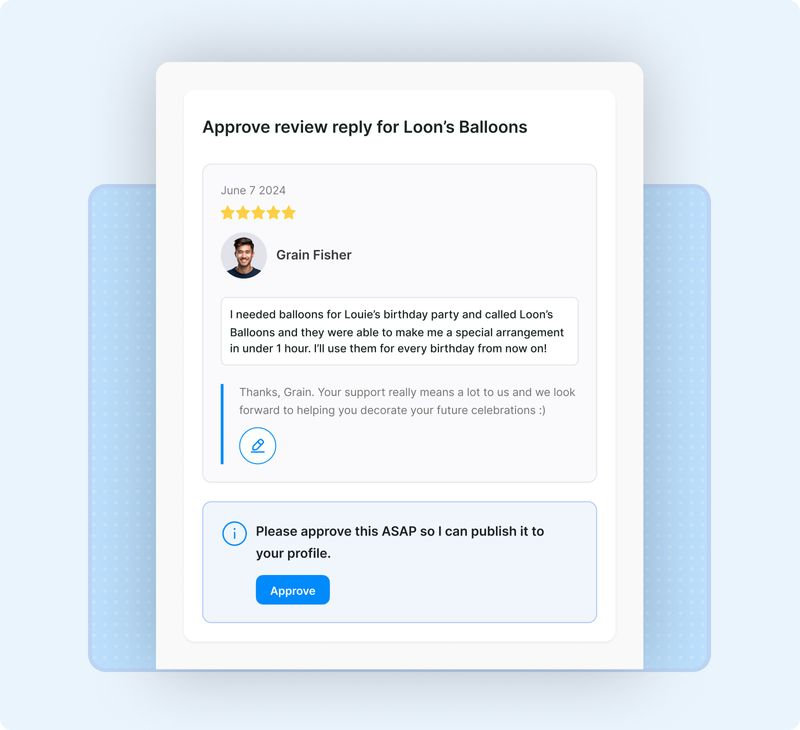
- Record who can approve public responses, listing changes, and crisis actions.
- Inventory third-party integrations and define what happens during offboarding.
Business information and local listings
- Verify the real-world business name without unnecessary keywords.
- Confirm address, service area, phone, website, and location eligibility.
- Review regular hours, special hours, categories, services, and attributes.
- Use a dedicated location or action page for appropriate business links.
- Check priority directories and industry platforms against the source of truth.
- Investigate possible duplicates before requesting a merge or removal.
- Document rejected edits, verification problems, and unresolved exceptions.
Review requests, monitoring, and responses
- Define an objective event that makes a customer eligible for a request.
- Apply the same eligibility rule without screening for expected sentiment.
- Ask for honest feedback without requesting a rating, wording, or keywords.
- Do not offer incentives for Google reviews.
- Confirm consent, sender identity, reminder frequency, and opt-out handling for each channel.
- Monitor new reviews and route sensitive matters to an appropriate person.
- Respond accurately without exposing private customer or transaction details.
- Report content only when there is a good-faith policy reason, not merely because it is negative.
- Track recurring themes and assign operational follow-up.
Protect the customer's independent opinion.
Google prohibits fake engagement, selective positive solicitation, incentives for reviews, and requests for specific content. The FTC also regulates fake reviews, conditioned incentives, and certain forms of review suppression.
Local visibility and customer conversion
- Complete accurate profile fields that help Google understand the business.
- Review the business across the service area, not only at its own address.
- Compare legitimate competitors for categories, services, content, and customer trust.
- Keep profile posts, photos, offers, and events accurate and current.
- Give each important service and location a useful website destination.
- Make calls, forms, bookings, directions, and other next steps easy on mobile.
- Test contact routes and confirm a person or system owns follow-up.
- Describe credentials, policies, pricing, and scope accurately without unsupported claims.
Measurement, cadence, and escalation
| Cadence | Review |
|---|---|
| Ongoing | New reviews, urgent feedback, failed requests, and customer follow-up |
| Monthly | Review recency, response time, listing exceptions, profile actions, leads, and recurring themes |
| Quarterly | Access, source-of-truth data, directory priorities, local visibility, website conversion, and policy changes |
| Event-driven | Moves, rebrands, ownership changes, suspensions, mergers, crises, or material service changes |
Document what changed and when. Rankings, ratings, and revenue can move for many reasons, so report measured associations honestly and avoid promising a guaranteed outcome.
Official sources
- Google Business Profile guidelines
- Google Business Profile Help: owners and managers
- Google Maps user-contributed content policy
- FTC: Consumer Reviews and Testimonials Rule questions and answers
This checklist is general operational guidance, not legal advice.